 Devixa
Devixa
Devixa
China’s AI infrastructure market has moved beyond hardware assembly. Global buyers now need an ai server system integrator that can connect GPUs, CPUs, high-speed networking, storage, cooling, software, and long-term support. This article introduces ten leading Chinese integrators serving international projects, while recognizing that “top” depends on the buyer’s priorities.
Jensen Huang, NVIDIA’s founder and CEO, once said, “The data center is the computer.” His observation reflects today’s procurement reality. A powerful server is only one part of an operational AI platform. Buyers must examine accelerator availability, rack density, liquid-cooling capability, cluster design, testing procedures, cybersecurity controls, and response times after deployment. Details matter. A delayed replacement fan can interrupt an entire training schedule.
The companies discussed here are assessed through practical signals, including engineering experience, partnerships, manufacturing capacity, overseas delivery, documentation quality, and technical support. Factory scale alone is not enough. A supplier may offer attractive pricing but lack experience with local power standards, import procedures, or multilingual service teams. That weakness can become expensive.
This is not a perfect ranking. Public data varies, project results are often confidential, and capabilities change quickly. Some integrators excel at hyperscale deployments, while others perform better in research laboratories or private enterprise clusters. Global buyers should verify certifications, reference customers, warranty terms, and service coverage before signing contracts. The goal is clearer comparison, not unquestioned promotion.
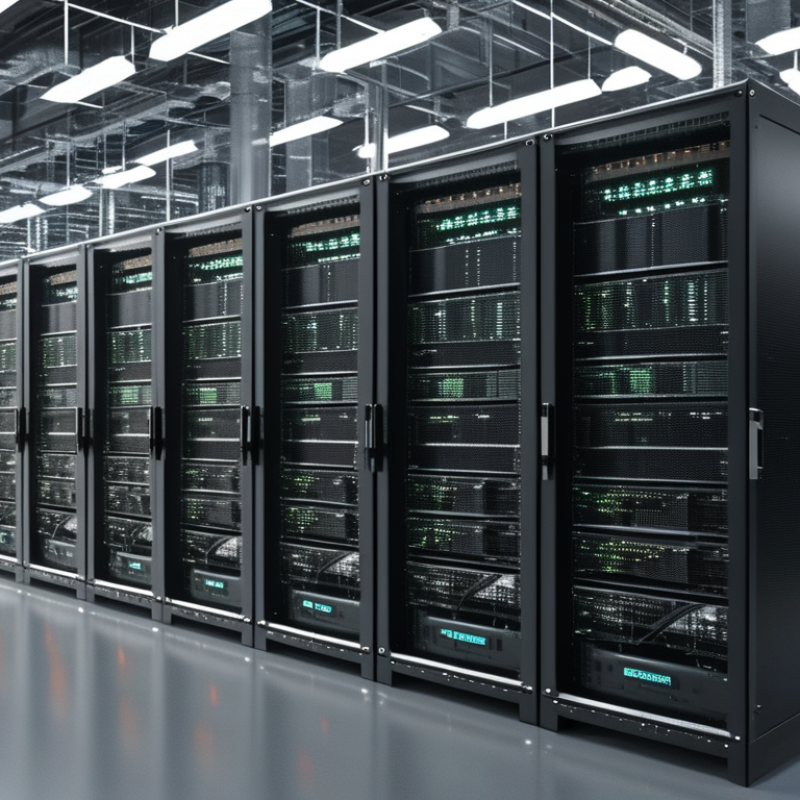
AI server system integrators help global buyers turn computing goals into workable infrastructure. They assess model size, training workload, data location, and expected user demand. Then they recommend server configurations, accelerators, memory capacity, storage, and high-speed networking.
Their work continues beyond hardware selection. An experienced integrator checks rack dimensions, power limits, airflow, and cooling capacity before delivery. They may assemble a test cluster, run workload simulations, and verify network performance under sustained pressure. Clear documentation should cover installation steps, firmware versions, security settings, and maintenance procedures. That detail matters. It reduces delays for overseas teams working across different time zones.
Reliable integrators also coordinate shipping, customs paperwork, remote installation, and local technical support. They should explain warranty terms and response times in plain language. Buyers can request test reports, customer references, and a detailed statement of work. Promises alone are weak evidence. Practical records matter more. No deployment is flawless. A configuration that performs well in a laboratory may struggle in a crowded data room. Power spikes, unstable cooling, or overlooked software settings can change results. Careful integrators leave room for adjustment, although their first proposal may still need revision after on-site testing. This honest process helps global buyers control risk while building AI infrastructure that can be operated, monitored, and expanded with greater confidence.
| No. | Integrator Capability Area | What the Integrator Does | Typical Technical Scope | Deliverables for Global Buyers | Common Acceptance Metrics |
|---|---|---|---|---|---|
| 1 | AI Workload Assessment and System Design | Translates model-training, inference, simulation, or data-processing requirements into a complete server-system specification. | Model size Batch size Precision User concurrency Power budget | Validated bill of materials, workload assumptions, rack plan, power estimate, cooling requirements, and expansion roadmap. | Projected throughput, latency, utilization, total cost of ownership, and estimated deployment capacity. |
| 2 | GPU and Accelerator Server Configuration | Integrates accelerator servers with suitable CPUs, memory, local storage, chassis, power supplies, and thermal components. | Multi-accelerator server configurations; high-memory CPU platforms; PCIe or direct accelerator interconnects; redundant power options. | Configured server units, component compatibility matrix, firmware baseline, factory test report, and spare-parts list. | Accelerator recognition, memory capacity, thermal stability, power draw, and sustained workload performance. |
| 3 | High-Speed Network Architecture | Builds the network fabric required for distributed training, clustered inference, storage access, and management traffic. | 100/200/400 GbE or equivalent high-speed fabrics; separate data, storage, and management networks; redundant uplinks. | Network topology, port map, cable schedule, switch configuration, IP plan, and failover procedure. | Bandwidth, packet-loss rate, latency, congestion behavior, link redundancy, and collective-communication efficiency. |
| 4 | AI Storage and Data Pipeline Integration | Connects compute nodes with storage systems capable of supplying large datasets and model checkpoints at predictable speeds. | NVMe-based local storage, shared file systems, object storage, parallel data access, caching, and backup tiers. | Storage architecture, capacity plan, performance test results, backup policy, and data-path documentation. | Sequential and random I/O, metadata performance, read/write bandwidth, checkpoint time, availability, and recovery time. |
| 5 | Cluster Software and Orchestration | Installs and configures the operating environment, drivers, container runtime, scheduler, monitoring tools, and AI software stack. | Linux-based environments; containerized workloads; cluster scheduling; resource isolation; driver and library compatibility testing. | Golden software image, deployment scripts, cluster configuration, user-access policy, and administrator handover documentation. | Node availability, job-start time, scheduling accuracy, software reproducibility, and successful multi-node training tests. |
| 6 | Data-Center, Rack, Power, and Cooling Planning | Checks whether the buyer’s facility can safely host high-density AI servers and recommends suitable rack-level infrastructure. | Rack density, power distribution, airflow management, liquid or air cooling, cable routing, and environmental monitoring. | Site-readiness checklist, rack elevation drawings, power calculations, cooling assessment, and installation method statement. | Power redundancy, inlet temperature, thermal headroom, rack load, airflow balance, and facility efficiency targets. |
| 7 | Security, Compliance, and Supply-Chain Documentation | Provides documentation and controls needed for international procurement, secure deployment, and organizational compliance reviews. | Asset traceability, secure configuration, access control, vulnerability handling, export documentation, and country-specific requirements. | Serial-number records, conformity documents, secure-build checklist, risk register, customs paperwork, and data-protection documentation. | Document completeness, traceability rate, vulnerability-remediation status, access-review results, and audit readiness. |
| 8 | Factory Testing and Performance Validation | Tests each system before shipment and verifies that the delivered cluster meets the agreed hardware and workload requirements. | Burn-in testing, memory testing, accelerator diagnostics, network testing, storage testing, thermal testing, and workload benchmarks. | Factory acceptance test, component report, benchmark results, defect log, corrective-action record, and shipment release certificate. | Pass rate, error-free burn-in duration, benchmark variance, thermal limits, link stability, and hardware fault rate. |
| 9 | Global Deployment, Commissioning, and Training | Coordinates international shipping, on-site or remote installation, cluster commissioning, user onboarding, and operational training. | Packaging and labeling, customs coordination, remote hands procedures, rack installation, software validation, and administrator training. | Delivery schedule, installation checklist, commissioning report, operating procedures, training materials, and as-built documentation. | On-time delivery, installation completion, cluster readiness, training completion, and successful production handover. |
| 10 | Lifecycle Support, Optimization, and Expansion | Maintains the system after deployment, improves utilization, manages replacement parts, and supports capacity expansion. | Remote monitoring, preventive maintenance, firmware lifecycle, spare-parts planning, performance tuning, and additional-node integration. | Support plan, escalation matrix, maintenance calendar, spare-parts recommendation, incident reports, and upgrade roadmap. | Response time, resolution time, system availability, mean time to repair, utilization improvement, and expansion compatibility. |
: Review architecture design, GPU allocation, cooling, networking, documentation, and post-sale support. Peak speed alone is insufficient.
Request rack diagrams, power calculations, benchmark results, burn-in reports, thermal data, and replacement procedures. Written evidence matters.
Ask for sustained workload tests, network latency measurements, and comparable deployment references. Laboratory results may miss daily conditions.
A dense rack can produce substantial heat. Confirm that air or liquid cooling matches the actual heat load.
Compare three-year ownership costs, including installation, firmware tuning, spare units, documentation, and service coverage. Low prices can hide exclusions.
Check component traceability, serial-number records, firmware controls, testing history, and spare-part availability. Delivery promises need supporting records.
Submit a practical support ticket and measure the response. Time-zone coverage and escalation paths should be clearly documented.
Rankings can change as technology, capacity, and regulations evolve. Use them as a shortlist, not final proof.
Confirm destination-market certifications, technical files, customs documents, and warranty terms. Requirements vary by location.
Do not judge only peak accelerator speed or attractive presentations. Model size, network design, cooling, and communication also affect results.
This guide introduces China’s top 10 AI server system integrators and explains how they support global buyers throughout the planning, configuration, deployment, and maintenance process. An ai server system integrator can combine computing hardware, accelerators, storage, networking, cooling, software environments, and technical services into a coordinated solution designed for specific workloads such as model training, inference, research, and enterprise data processing. The article also outlines how buyers can evaluate integration companies based on engineering expertise, customization capabilities, product compatibility, quality control, documentation, communication, and after-sales support.
It further compares the featured integrators by examining their service scope, technology coordination, project experience, delivery capacity, testing procedures, and ability to support international procurement. The final section presents practical selection factors, including budget transparency, scalability, lead times, warranty arrangements, compliance awareness, and long-term cooperation potential. Together, these insights help organizations choose a reliable Chinese partner that can deliver an efficient, adaptable, and professionally managed AI infrastructure solution.
