Devixa Devixa

How to Choose the Top AI Server Manufacturers in 2026?

Time:2026-09-21 Author:Aria
0%

Choosing among the top ai server manufacturers in 2026 requires more than comparing processor names or advertised prices. AI infrastructure is becoming a long-term operational decision. IDC’s Worldwide AI and Generative AI Spending Guide forecasts global AI spending will reach $632 billion by 2028, with a 29% compound annual growth rate from 2024. This expansion increases demand for servers that can handle large language models, scientific workloads, and real-time inference without wasting power.

Look beyond benchmark headlines. A reliable evaluation should examine GPU availability, memory capacity, networking speed, cooling design, firmware support, and warranty response times. TrendForce has reported strong growth in AI server shipments, driven by hyperscalers and data-center operators. That growth also exposes a practical risk: supply promises may change when advanced GPUs, high-bandwidth memory, or liquid-cooling components become scarce. A factory tour, service-level agreement, and reference customer can reveal more than a polished product page.

The best manufacturer depends on your workload.

For example, a research lab may value flexible GPU configurations and software compatibility. A financial institution may prioritize security controls, predictable maintenance, and low inference latency. Independent testing from organizations such as MLPerf can help compare performance, although results may not mirror your actual applications. I would not treat any ranking as permanent. Pricing, energy costs, and accelerator availability can shift quickly. Careful buyers should request workload-based demonstrations, three-year operating-cost estimates, and documented support terms before signing. That process is slower. It is usually safer.
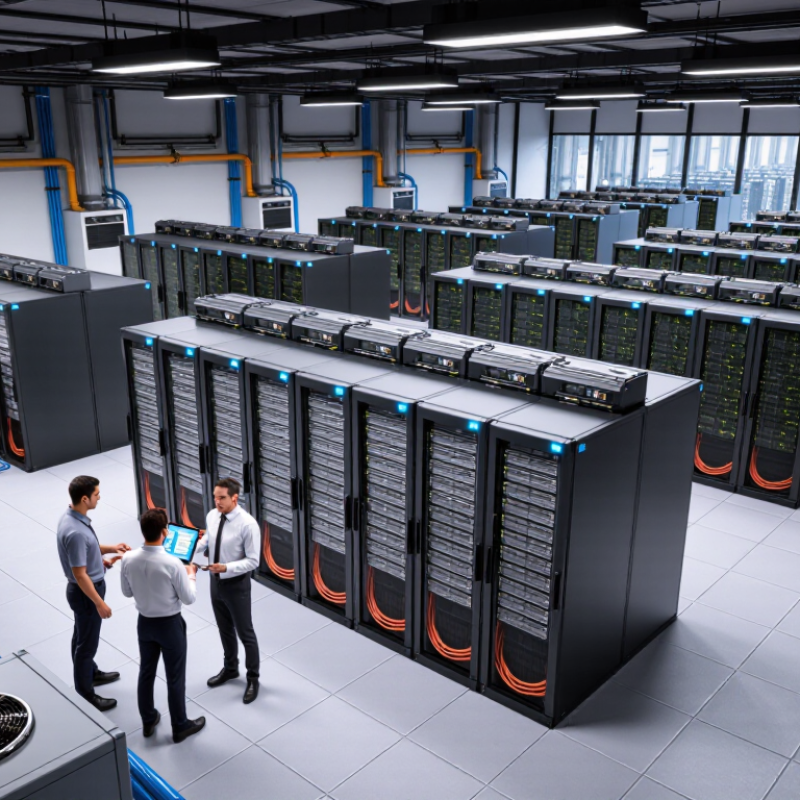
How to Choose the Top AI Server Manufacturers in 2026?

Defining What Makes an AI Server Manufacturer a Top Choice in 2026

In 2026, a top AI server manufacturer is defined by more than accelerator density. Real expertise appears in stable performance under sustained workloads. Ask for measured results, not impressive peak numbers. Test training, inference, storage access, and network traffic together. A useful evaluation includes power draw, cooling performance, repair time, and rack-level noise. These details affect daily operations.

Engineering quality also depends on practical design choices. Look for balanced airflow, tool-free component access, clear firmware controls, and reliable remote management. Support teams should provide diagnostic logs, replacement procedures, and realistic response times. Strong manufacturers document compatibility across processors, memory, networking, operating systems, and workload frameworks. Their security process should include signed firmware, controlled updates, and vulnerability disclosure. Small oversights become expensive later.

No scorecard is perfect. A vendor may perform well in benchmarks but struggle with delivery consistency or field repairs. Another may offer excellent support while lacking flexible configurations. Review customer references, factory testing methods, warranty terms, and long-term parts availability. Examine how the manufacturer handles failures, not only successful demonstrations. I would request a pilot deployment with real data patterns and a written acceptance test. The result might challenge initial assumptions. That is useful. A top choice should prove dependable in ordinary conditions, during peak demand, and after the first year.

Evaluating AI Server Performance, Scalability, and Hardware Design

How to Choose the Top AI Server Manufacturers in 2026?

Evaluating AI servers requires more than counting accelerators. Measure tokens per second, training time, memory bandwidth, and inference latency. MLPerf results provide useful comparisons, but laboratory scores rarely match production workloads. Request tests using your own model, batch size, and data pipeline. Small details matter.

Scalability should be tested at rack level. Examine high-speed interconnects, topology, cooling capacity, and failure recovery. A server that performs well alone may weaken when eight systems communicate continuously. The International Energy Agency reported that data centers used about 415 TWh of electricity in 2024. It expects demand to approach 945 TWh by 2030. Therefore, power efficiency is a financial metric, not only an environmental concern.

Hardware design also affects long-term reliability. Check airflow paths, liquid-cooling support, power redundancy, firmware controls, and component replacement time. The Uptime Institute’s Global Data Center Survey shows that outages still create significant business losses, even as operators improve resilience. Ask manufacturers for measured PUE impact, thermal limits, and service records. Be skeptical of peak specifications. They can hide throttling, network congestion, or difficult maintenance. My practical mistake was trusting benchmark averages before checking sustained performance. A repeatable test plan is safer.

Comparing GPU Platforms, Networking, Storage, and Energy Efficiency

How to Choose the Top AI Server Manufacturers in 2026?

GPU performance is only one purchasing signal. MLCommons’ MLPerf Training v4.1 results show that accelerator speed changes sharply across workloads. A platform that excels at image training may perform poorly during large-language-model fine-tuning. I would test real batch sizes, memory use, and checkpoint intervals. Peak results can mislead. A useful evaluation also measures GPU utilization, interconnect latency, and performance per watt. High-speed links matter when dozens of accelerators share one model.

Storage and networking often decide whether expensive GPUs stay busy. Select servers with strong parallel-storage support, NVMe bandwidth, and fast recovery after failures. The Storage Networking Industry Association recommends measuring sustained throughput, not only sequential specifications. Network congestion can turn a powerful cluster into an expensive waiting room. It happens. The International Energy Agency’s Electricity 2024 report estimates data centers used about 460 TWh globally in 2022, with demand potentially exceeding 1,000 TWh by 2026. Uptime Institute’s 2024 Global Data Center Survey also identifies power availability as a growing constraint. Compare performance per watt, rack density, cooling design, and power-capping controls. A 30-kilowatt rack may look efficient on paper, yet overwhelm an older facility. Liquid cooling can reduce thermal pressure, but it adds maintenance complexity and requires trained operators. I would request measured PUE data under comparable workloads, then question any figure that lacks test conditions.

Assessing Reliability, Security, Support, and Supply Chain Strength

Choosing a top AI server manufacturer in 2026 requires more than comparing processor counts. Reliability should be tested under sustained workloads, not only during short demonstrations. Ask for burn-in results, thermal records, power redundancy details, and failure-rate data from comparable deployments. A clean specification sheet is useful, but field evidence matters more.

Security must cover the entire server lifecycle. Look for secure boot, signed firmware, hardware-rooted identity, and documented vulnerability response times. Request a software bill of materials where available. Confirm how returned drives are sanitized. Support quality is equally practical. Strong manufacturers provide clear service-level agreements, regional technicians, replacement parts, and an escalation path that reaches engineers. Test the support desk before purchase. A slow reply is a warning.

Supply chain strength often decides whether an AI project launches on schedule. Review component traceability, multi-source planning, regional inventory, and realistic lead times. Ask how shortages affect memory, networking cards, and cooling systems. Do not accept vague promises. Require shipment milestones and written change-control procedures. I would also inspect packaging and delivery records; damaged equipment can erase weeks of planning. No scorecard is perfect. My own evaluation would still include small pilot orders, because projected capacity can differ from warehouse reality. That uncomfortable gap deserves attention.

Selecting the Best AI Server Manufacturer for Specific Business Needs

Choosing an AI server manufacturer in 2026 starts with your workload, not a glossy specification sheet. A language model team may need dense accelerator capacity, while a vision system may prioritize fast storage and network latency. Map daily inference volume, training cycles, model size, and peak users before requesting quotations. Measure reality.

An experienced buyer checks accelerator compatibility, memory bandwidth, cooling design, and power behavior under sustained load. Ask for test results using your datasets, not only synthetic benchmarks. Request evidence of firmware updates, component traceability, warranty response times, and on-site service coverage. These details reveal reliability. Also inspect rack depth, noise levels, cable access, and replacement procedures. A server that performs well but overheats your room is not a successful purchase.

Cost analysis should include electricity, maintenance, software support, and downtime over three to five years. Clarify delivery schedules and whether spare parts remain available throughout the planned service life. Independent certifications and documented security controls can strengthen trust, but paperwork cannot replace hands-on testing. Leave room for uncertainty. Workloads change, budgets tighten, and promised performance may differ from production behavior. A short pilot with failure logging often exposes weaknesses that a sales demonstration hides. That extra week may prevent an expensive decision.

How to Choose the Top AI Server Manufacturers in 2026? - Selecting the Best AI Server Manufacturer for Specific Business Needs

A practical, vendor-neutral evaluation matrix for matching AI server capabilities with business requirements

Business Scenario Recommended Accelerator Configuration System Memory Requirement Network Target Storage Target Power and Cooling Check Availability Requirement Manufacturer Evidence to Request Suggested Evaluation Weight
Large-Scale Model Training 8 or more data-center accelerators per node; high-speed interconnect support required At least 512 GB ECC system memory per node; accelerator memory should be matched to model size 200–400 Gb/s fabric connectivity for distributed training workloads At least 15 GB/s sequential read capability per training node; local NVMe scratch storage recommended Validate rack power, thermal design, airflow direction, and liquid-cooling compatibility where required Redundant power supplies, hot-swappable fans, remote management, and documented failure recovery Distributed-training benchmark, interconnect topology, thermal test report, firmware lifecycle, and spare-parts policy 25%
AI Inference at Scale 1–4 accelerators per node, selected according to model precision, batch size, and latency target 128–512 GB ECC system memory; sufficient memory headroom for model serving and caching 25–100 Gb/s per node for centralized services; higher bandwidth for clustered deployments At least 3 GB/s sequential read capability; prioritize low latency and predictable I/O Confirm sustained power draw under inference load, not only the rated maximum Target service availability of 99.9% or higher for production-facing applications Tokens-per-second or requests-per-second test, p95 latency, power-per-inference, and deployment reference architecture 20%
Enterprise AI and Analytics 1–4 accelerators per server with flexible PCIe expansion and virtualization support 256–512 GB ECC system memory for mixed analytics, database, and AI workloads 25–100 Gb/s, depending on dataset size and cluster traffic Redundant enterprise storage; NVMe for active datasets and separate backup capacity Assess rack density, electrical redundancy, acoustic limits, and data-center cooling capacity High-availability configuration, remote diagnostics, and documented maintenance procedures Virtualization compatibility, management integration, security documentation, and five-year operating-cost estimate 15%
Research and Development 1–8 accelerators with broad software-stack compatibility and accessible expansion slots 128–512 GB ECC system memory, expandable without replacing the chassis 25–200 Gb/s, based on whether experiments are local or distributed At least 4 TB usable local NVMe capacity for datasets, containers, and checkpoints Prefer modular power and cooling design to accommodate future accelerator upgrades Standard redundant components are preferred; serviceability and upgrade access are critical Supported operating systems, container compatibility, developer documentation, BIOS controls, and upgrade roadmap 10%
Small and Medium-Sized Business 1–2 accelerators with standard rack or tower form factors and moderate power requirements 64–256 GB ECC system memory with a clear upgrade path 10–25 Gb/s is generally adequate for a single-server deployment 2–8 TB usable NVMe or hybrid storage with separate backup protection Confirm compatibility with existing circuits, rack depth, noise limits, and cooling capacity Prioritize simple maintenance, next-business-day support, and replaceable components Total cost of ownership, warranty terms, deployment lead time, remote support, and local service coverage 10%
Edge AI and Remote Sites 1–2 compact, low-power accelerators with operating-temperature and vibration tolerance 32–128 GB ECC or error-detection-capable memory, depending on deployment risk 1–10 Gb/s; offline operation and store-and-forward capability may be more important than bandwidth 1–4 TB industrial-grade local storage with encrypted data protection Verify temperature range, dust protection, power fluctuation tolerance, and remote reboot capability Prioritize remote monitoring, secure boot, component durability, and rapid replacement logistics Environmental test data, security controls, remote-management functions, field-replacement procedure, and enclosure specifications 10%
Regulated or Sensitive Data Configuration should support workload isolation, secure boot, hardware root of trust, and encrypted storage ECC memory is strongly preferred; capacity should be sized for local processing to reduce data movement 10–100 Gb/s with network segmentation and encrypted management traffic Encrypted NVMe or redundant storage with secure erase and auditable backup procedures Require documented component provenance, secure firmware updates, and controlled physical access Redundancy, audit logging, secure remote management, and defined incident-response support Security certifications, vulnerability-disclosure process, firmware signing, data-destruction policy, and access-control documentation 10%

Core Selection Criteria for 2026

Score each manufacturer from 1 to 5 for performance, system compatibility, scalability, energy efficiency, reliability, security, service coverage, delivery capability, and total cost of ownership. Multiply each score by the relevant evaluation weight and compare only systems tested with the intended workload.

Planning figures are vendor-neutral reference ranges rather than manufacturer claims. Final requirements should be validated through workload benchmarking, rack-power analysis, thermal assessment, security review, and a written service-level agreement.

FAQS

Why should GPU performance not be the only buying factor?

Accelerator speed varies across workloads. Test real batch sizes, memory use, and checkpoint intervals. Peak results can mislead. Measure utilization, latency, and performance per watt. My first comparison might still miss an unusual workload.

How can buyers evaluate GPUs for language-model training?

Run representative fine-tuning tests with the intended model size. Record training time, memory pressure, and interconnect delays. Image workloads may hide weak language-model performance. Use actual data patterns when possible.

Why are networking and storage important in AI servers?

Slow storage can leave expensive GPUs waiting. Measure sustained throughput, not only sequential specifications. Check NVMe bandwidth and recovery speed. Network congestion creates an expensive waiting room. It happens.

What networking features matter when many accelerators share one model?

High-speed links reduce communication delays between accelerators. Measure interconnect latency during heavy traffic. Test congestion with realistic cluster sizes. A small demonstration may look excellent, yet fail at scale.

How should energy efficiency and cooling be compared?

Compare performance per watt, rack density, cooling design, and power controls. Request measured efficiency data under matching workloads. A 30-kilowatt rack may overwhelm an older facility. Paper efficiency is not enough.

What are the advantages and risks of liquid cooling?

Liquid cooling can reduce thermal pressure in dense racks. It also adds maintenance demands and operator training. Inspect leak controls, service procedures, and replacement plans. Cooling is never effortless.

How can buyers assess server reliability and security?

Request burn-in results, thermal records, redundancy details, and comparable failure-rate data. Check secure boot and signed firmware. Ask about hardware-rooted identity and vulnerability response times. Field evidence matters more.

What support and supply-chain questions should buyers ask?

Confirm service agreements, regional technicians, replacement parts, and engineer escalation. Test the support desk before purchasing. A slow reply is a warning. Review component traceability, inventory, lead times, and shipment milestones.

Why are pilot orders useful before a large deployment?

A small pilot can reveal delivery damage, unstable performance, and missing components. Inspect packaging and warehouse records. Projected capacity may differ from reality. That uncomfortable gap deserves attention. No scorecard is perfect.

Conclusion

Choosing among the top ai server manufacturers in 2026 requires more than comparing processor specifications or purchase prices. A strong manufacturer should provide high-performance systems with scalable architectures, efficient cooling, flexible hardware designs, and reliable support for demanding AI workloads. Buyers should evaluate GPU platforms, high-speed networking, storage capacity, and energy efficiency to determine whether a server can deliver consistent performance as models and datasets grow.

Reliability, security, warranty coverage, technical assistance, and supply chain stability are equally important. Organizations should consider deployment requirements, workload types, budget, expansion plans, and compliance expectations before making a decision. The best manufacturer is not necessarily the one offering the most powerful machine, but the one that provides a balanced combination of performance, manageability, operating efficiency, long-term dependability, and responsive service. A structured evaluation of these factors can help businesses select an AI server solution that supports both current operations and future innovation.

Aria

Aria

Aria is a dedicated marketing professional with a deep passion for innovative strategies and a keen understanding of our company's product offerings. With a wealth of experience in the industry, Aria excels at crafting engaging content that highlights the unique features and benefits of our......