Devixa Devixa

10 Tips for Choosing an AI Server Manufacturing Company?

Time:2026-10-11 Author:Aria
0%

Choosing an AI server manufacturing company is no longer a simple comparison of prices, processor brands, or glossy product photos. AI workloads demand dense GPU configurations, stable power delivery, advanced cooling, and dependable software integration. A promising specification sheet means little if the system overheats during a long model-training cycle.

Jensen Huang, NVIDIA’s founder and CEO, has said, “The future of computing is accelerated computing.” His observation explains why buyers must examine more than individual components. A reliable supplier should demonstrate experience with GPU servers, liquid or high-efficiency air cooling, rack-level testing, and firmware optimization. Ask for measurable evidence, such as thermal test results, burn-in procedures, failure rates, and response times for technical support. Details matter. A delayed replacement fan can interrupt an entire research schedule.

This guide presents ten practical tips for evaluating an AI server manufacturing company. It considers engineering capability, production consistency, component traceability, cybersecurity practices, energy efficiency, customization, warranty terms, and after-sales service. It also encourages direct factory questions rather than relying on marketing language. Some manufacturers may offer impressive performance but weak documentation. Others may provide excellent hardware but limited regional support. Neither issue should be ignored.

Look closely.

The strongest decision may not involve the lowest quotation. It may involve a supplier that explains limitations honestly, tests every rack carefully, and improves after receiving criticism. That standard is difficult to verify quickly. However, careful evaluation can reduce operational risk and create a more dependable foundation for future AI infrastructure.
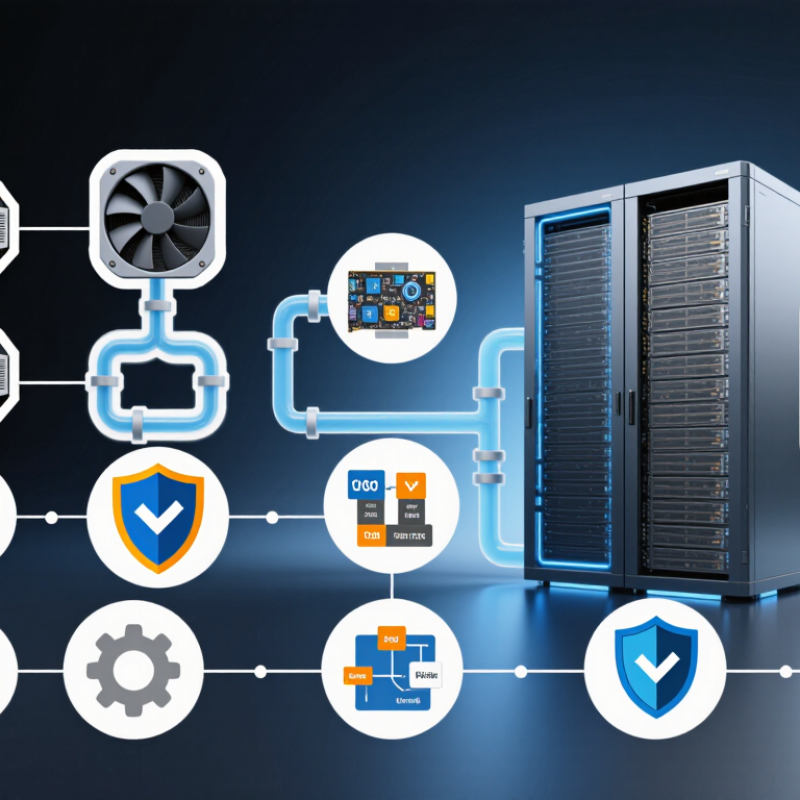
10 Tips for Choosing an AI Server Manufacturing Company?

Define Your AI Server Performance and Deployment Requirements

Tip: Define your AI server performance targets before contacting a manufacturer. Specify model size, training frequency, inference volume, and acceptable response time. Measure real workloads. A server built for occasional testing may fail under continuous production traffic. Record GPU memory needs, CPU utilization, storage speed, and network bandwidth. These details create a practical baseline for supplier discussions.

Tip: Match deployment conditions to the proposed hardware. State whether the server will operate in a data center, private room, or edge location. Mention available rack space, power limits, cooling capacity, and noise restrictions. Small tests mislead. Request benchmark results using comparable models, batch sizes, and precision settings. Ask how performance changes during extended operation, not only during a short demonstration.

Tip: Evaluate the manufacturer’s engineering evidence, not only its advertised specifications. Request thermal test records, component compatibility details, firmware support policies, and a clear service-level agreement. Confirm expansion options for memory, storage, networking, and accelerator capacity. Leave room. Requirements often change after deployment. I have seen teams overestimate peak performance and underestimate maintenance time. A useful supplier should question unclear assumptions and explain trade-offs plainly. Your final specification should include measurable acceptance tests, power estimates, monitoring requirements, and a realistic replacement plan.

Define Your AI Server Performance and Deployment Requirements

Representative GPU memory requirements for common AI workloads. Use the workload profile, model size, concurrency, and latency target to compare server configurations before selecting a manufacturing partner.

These values are practical planning estimates: actual requirements vary with precision, batch size, context length, quantization, optimizer settings, and the number of concurrent users.

Evaluate Manufacturing Expertise, Product Quality, and Customization Options

Evaluate an AI server manufacturer through documented experience, not polished claims. Ask for production years, annual capacity, and similar high-density deployments. Verify thermal expertise with airflow diagrams, liquid-cooling tests, and measured inlet temperatures. Demand component traceability from factory records to the final rack. Inspect incoming inspection, burn-in duration, failure analysis, and corrective-action procedures. Quality needs evidence.

The International Energy Agency’s Electricity 2024 report estimates data centers used 460 terawatt-hours globally in 2022. It also projects consumption could exceed 1,000 terawatt-hours by 2026. Therefore, assess power efficiency, fan control, and cooling customization carefully. Check whether the manufacturer can adapt GPU layouts, memory, storage, networking, rack dimensions, and redundant power designs. Request independent test data, not only laboratory screenshots. Test the details.

Review firmware control, component availability, spare-parts planning, and the service-level agreement. Ask how quickly engineers respond during a failed accelerator or overheating event. Compare warranty terms with real repair procedures. Speak with two comparable customers, preferably about failures rather than successes. A manufacturer should explain limitations openly. Perfect specifications rarely exist. I would also calculate total ownership cost over three years, including electricity, cooling, maintenance, and delayed production. IDC’s 2024 AI infrastructure outlook highlights accelerating investment, but rapid growth can hide immature processes. A smaller pilot order may reveal more than a confident sales presentation.

10 Tips for Choosing an AI Server Manufacturing Company: Evaluate Manufacturing Expertise, Product Quality, and Customization Options
No. Evaluation Tip Key Dimension to Assess Evidence and Questions to Check Practical Benchmark Potential Red Flag
1 Verify AI Server Manufacturing Experience Production capability and relevant engineering experience Ask for documented experience with GPU, accelerator, high-memory, and high-density server systems. Review production capacity, engineering staffing, factory workflow, and experience with rack-scale integration. The manufacturer should demonstrate repeatable production processes, documented quality procedures, and experience handling high-power computing hardware. Only general desktop or low-density server experience with no evidence of AI system integration.
2 Assess Product Quality and Reliability Component quality, assembly consistency, and failure prevention Request quality-control procedures, incoming inspection records, assembly checklists, burn-in policies, failure-rate tracking, and corrective-action reports. Quality should be controlled through documented inspections, traceability, functional testing, and a formal process for handling nonconforming products. Quality is described only with general marketing terms and cannot be supported by procedures or test records.
3 Examine Thermal Design Cooling capacity and sustained performance Review airflow design, fan redundancy, heatsink specifications, inlet-temperature limits, thermal simulation or validation reports, and performance results under continuous load. The system should maintain stable operating temperatures and avoid performance throttling during representative, sustained AI workloads. Thermal claims are based only on short benchmark runs or do not specify ambient temperature and workload conditions.
4 Evaluate Power and Electrical Design Power delivery, efficiency, and operational safety Check power-budget calculations, power-supply efficiency information, input-voltage compatibility, circuit requirements, power monitoring, and protection features. The manufacturer should provide a realistic maximum and typical power profile, with sufficient power headroom for the selected accelerators and storage devices. The quoted power figure excludes accelerator load, startup demand, or expansion components.
5 Review Customization Options Hardware configuration and system integration flexibility Confirm support for different accelerator quantities, CPU and memory configurations, storage layouts, network adapters, chassis sizes, firmware settings, and rack integration requirements. Configuration options should be documented with compatibility limits, validated combinations, and clear effects on power, cooling, and performance. Customization is promised without written compatibility validation or a defined change-control process.
6 Check Testing and Validation Procedures Functional, stress, compatibility, and system-level testing Ask whether each system receives memory testing, storage testing, network testing, accelerator diagnostics, firmware checks, stress testing, and final configuration verification. Testing should cover the complete system rather than individual components only, and test results should be traceable to the delivered unit. The supplier provides component specifications but no system-level validation plan.
7 Confirm Firmware and Software Compatibility Operating-system, driver, firmware, and orchestration support Verify compatibility with the intended operating system, accelerator drivers, container platform, monitoring tools, remote management interface, and firmware update process. The manufacturer should provide a tested software stack, version-control guidance, update procedures, and a clear method for resolving compatibility issues. Customers are expected to identify and solve driver, firmware, or operating-system conflicts independently.
8 Evaluate Serviceability and Manageability Maintenance access, monitoring, and remote management Inspect the design for tool-less access where appropriate, replaceable fans and power supplies, cable accessibility, component labeling, remote monitoring, and event logging. Routine maintenance should be possible without unnecessary system disassembly, and administrators should be able to monitor temperature, power, fan status, and hardware events. Critical components are difficult to replace or system-health information is unavailable remotely.
9 Review Warranty and Technical Support Response time, spare parts, repair process, and lifecycle support Compare warranty duration, support hours, response targets, replacement-part availability, advance-replacement terms, repair locations, escalation procedures, and firmware support policies. Support terms should be written, measurable, and suitable for the operational importance of the AI infrastructure. Warranty coverage is vague, excludes major system components, or provides no defined escalation path.
10 Request a Proof-of-Concept and Total-Cost Review Real-world performance, scalability, and ownership cost Run representative workloads and compare throughput, latency, power consumption, cooling requirements, rack space, software compatibility, maintenance effort, and upgrade costs. The final decision should be based on measured results from the intended workload, not on component specifications or theoretical peak performance alone. The supplier refuses workload testing or provides performance figures without test conditions and measurement methods.

Verify Supply Chain Stability, Compliance, and Production Capacity

10 Tips for Choosing an AI Server Manufacturing Company?

Verify Supply Chain Stability, Compliance, and Production Capacity

Choosing an AI server manufacturer requires evidence, not polished promises. Request supplier maps for processors, memory, storage, power units, and networking parts. Check whether critical components come from multiple qualified sources. A single delayed shipment can stop an entire rack build. Ask for recent lead-time records, inventory policies, and backup plans. They should explain how shortages affect delivery dates. Vague answers deserve closer review.

Compliance must appear in daily operations, not only in a certificate folder. Examine product safety testing, electromagnetic compatibility reports, environmental controls, and traceability procedures. Confirm that the manufacturer follows applicable trade, labor, data protection, and recycling requirements in your market. Review serial-number tracking from incoming parts to final inspection. Factory visits can reveal more than presentations. Look at inspection stations, calibration labels, worker training records, and packaging conditions. No audit is perfect. I would record open issues instead of treating a clean visit as proof of excellence.

Production capacity also needs practical verification. Ask to inspect a sample build and review test results for thermal stability, power draw, firmware control, and sustained workload performance. Compare stated monthly output with actual staffing, line space, testing equipment, and maintenance schedules. Request references for similar deployment volumes, without accepting confidential information. A small pilot order can expose weak processes before a large commitment. The pilot may slow purchasing, but skipping it can cost much more. Also examine repair capacity, spare-part storage, escalation contacts, and realistic replacement times. Reliability is built in the factory.

Compare Technical Support, Warranty Coverage, and Lifecycle Services

10 Tips for Choosing an AI Server Manufacturing Company?

Compare Technical Support, Warranty Coverage, and Lifecycle Services

Technical support should be measurable, not merely advertised. Ask for response times, escalation paths, and engineer availability during weekends. Ask for evidence. Request sample service reports, ticket metrics, and remote troubleshooting procedures. A strong manufacturer can explain how it handles GPU failures, thermal alarms, firmware conflicts, and unstable workloads. Short response times matter, but clear ownership matters more.

Warranty coverage deserves careful reading. Check whether parts, labor, shipping, and onsite visits are included. Read the exclusions. Some agreements cover hardware but exclude damage caused by power quality, unauthorized modifications, or unsupported software. Confirm replacement timelines and advance-exchange procedures. One overlooked detail can leave an expensive server idle for weeks. I have seen procurement teams focus on warranty length and miss the actual service conditions.

Lifecycle services reveal the manufacturer’s long-term reliability. Ask how it manages spare parts, firmware updates, security patches, capacity expansion, and end-of-support notices. The supplier should provide migration guidance when a processor or accelerator becomes obsolete. Training for administrators also reduces avoidable downtime. Request a five-year service roadmap with estimated maintenance costs. That matters. Still, no plan is perfect, so test the escalation process before signing. A practical pilot, involving your technical staff, may expose support gaps that a polished sales presentation hides.

Assess Total Costs, Delivery Terms, and Long-Term Partnership Value

Tip 1: Build a five-year total-cost model. Include GPUs, host systems, racks, power, cooling, software, shipping, taxes, maintenance, and replacement parts.

The International Energy Agency estimates data centers consumed about 415 TWh globally in 2024. Energy efficiency directly affects operating budgets.

Tip 2: Request measured performance, not brochure estimates. Ask for power draw, thermal output, workload benchmarks, and noise levels under sustained AI training.

Delivery terms can quietly create major risk.

Tip 3: Put configuration, testing, packaging, and acceptance criteria in the contract. Confirm whether delivery means arrival, installation, or successful site acceptance.

Tip 4: Ask for component substitution rules and realistic lead times. A delayed accelerator shipment can leave an expensive rack idle.

Uptime Institute’s 2024 Global Data Center Survey found that 54% of respondents reported their latest outage cost more than $100,000. That figure makes commissioning and support terms financially important, not administrative details.

Long-term value depends on the relationship after installation.

Tip 5: Compare warranty duration, response times, spare-parts availability, firmware support, and technician coverage.

Tip 6: Request references from organizations running similar workloads.

Tip 7: Test the escalation process before signing. A polished sales call proves little.

Tip 8: Review secure data handling and equipment retirement procedures.

Tip 9: Check upgrade paths for memory, networking, and cooling.

Tip 10: Score transparency alongside price.

I would not ignore a cheaper proposal, but unclear assumptions deserve a penalty. Revisit the scoring model after technical validation; early estimates are often optimistic.

FAQS

What performance details should be defined before selecting an AI server?

Record model size, training frequency, inference volume, and acceptable response time. Measure real workloads. Note GPU memory, CPU use, storage speed, and network bandwidth.

Why can a small AI server test produce misleading results?

Short tests may not represent continuous production traffic. Compare matching models, batch sizes, and precision settings. Extended testing reveals heat, slowdown, and maintenance demands.

Which deployment conditions should be shared with a manufacturer?

Describe the data center, private room, or edge location. Include rack space, power limits, cooling capacity, and noise restrictions. These details affect hardware choices.

What evidence shows that a manufacturer has strong engineering experience?

Request thermal records, airflow diagrams, inlet temperatures, and liquid-cooling results. Ask for compatibility details and firmware support policies. Polished specifications are not enough.

How can product quality be checked before purchasing?

Review factory records, incoming inspections, burn-in duration, and failure-analysis procedures. Confirm component traceability to the final rack. Quality needs evidence.

What customization options matter for high-density AI servers?

Check support for GPU layouts, memory, storage, networking, rack dimensions, and redundant power. Ask about expansion capacity. Leave room for changing requirements.

How should power and cooling costs be evaluated?

Calculate electricity, cooling, maintenance, and delayed production costs over three years. Review fan control and cooling customization. Efficiency matters more during continuous operation.

What service questions should be asked before deployment?

Ask response times for accelerator failures and overheating events. Compare warranty terms with actual repair procedures. Discuss spare parts, firmware control, and replacement planning.

Is a pilot order useful before a larger purchase?

Yes, a smaller pilot can expose weak processes and unclear assumptions. Test acceptance criteria, monitoring, power use, and maintenance time. Sales confidence can still mislead.

Conclusion

Choosing the right ai server manufacturing company requires more than comparing hardware specifications or initial prices. Begin by defining your AI workloads, computing performance targets, expansion plans, deployment environment, power limitations, and cooling requirements. Then assess each manufacturer’s engineering expertise, product quality controls, testing procedures, and ability to customize configurations for your applications. It is also important to verify supply chain stability, regulatory compliance, production capacity, and the company’s ability to maintain consistent delivery schedules as demand changes.

A reliable evaluation should also include technical support, warranty terms, spare-parts availability, maintenance response times, and lifecycle management services. Compare the total cost of ownership, including energy use, upgrades, installation, logistics, and long-term maintenance rather than focusing only on purchase price. Clear delivery terms, transparent communication, and flexible service arrangements can reduce operational risks. Ultimately, the best partner is one that combines dependable manufacturing, practical customization, responsive support, and sustainable long-term value for your AI infrastructure.

Aria

Aria

Aria is a dedicated marketing professional with a deep passion for innovative strategies and a keen understanding of our company's product offerings. With a wealth of experience in the industry, Aria excels at crafting engaging content that highlights the unique features and benefits of our......